Do you know who is using? With all of these people, varying in age, using marijuana you'd think the government would give in and legalize it. What is stopping them? The chart below is from 2009 and the numbers may be different know but it is accurate. 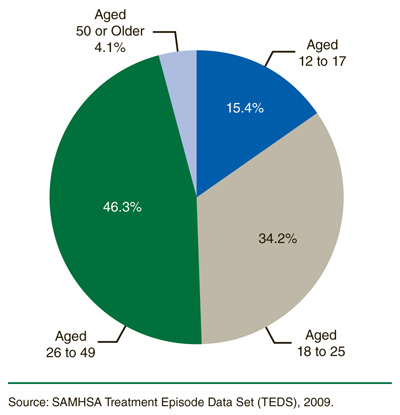 Since 1990 a reported 20.5 million people have used marijuana in an average year. From 1990 to 2005 annual usage was at its greatest reported level in 2002 at 25.9 million and its lowest level in 17.4 million in 1992. Peer Pressure  Having friends that smoke weed around you when you don't, is hard. Sometimes, those friends will tell you "it's okay to smoke" or "try it, it won't hurt you". PEER PRESSURE. We don't have to give into it, but we often find ourselves doing it anyway. 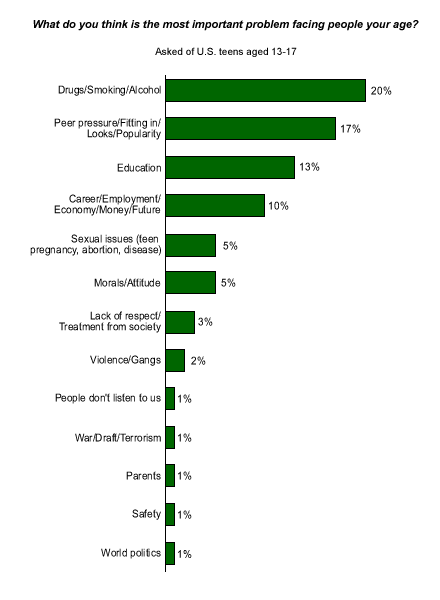 In the chart above, the top two things are smoking, and peer pressure. This makes sense because majority of the time, the peer pressure is to smoke.
|
FACTS
Fact #1: Most marijuana users never use any other illicit drug.Marijuana does not cause people to use hard drugs. Marijuana is the most popular illegal drug in the United States today. Therefore, people who have used less popular drugs such as heroin, cocaine, and LSD, are likely to have also used marijuana. Most marijuana users never use any other illegal drug and the vast majority of those who do try another drug never become addicted or go on to have associated problems. Indeed, for the large majority of people, marijuana is a terminus rather than a so-called gateway drug. Fact #2: Most people who use marijuana do so occasionally. Increasing admissions for treatment do not reflect increasing rates of clinical dependence.According to a federal Institute of Medicine study in 1999, fewer than 10 percent of those who try marijuana ever meet the clinical criteria for dependence, while 32 percent of tobacco users and 15 percent of alcohol users do. According to federal data, marijuana treatment admissions referred by the criminal justice system rose from 48 percent in 1992 to 58 percent in 2006. Just 45 percent of marijuana admissions met the Diagnostic and Statistical Manual of Mental Disorders criteria for marijuana dependence. More than a third hadn’t used marijuana in the 30 days prior to admission for treatment. Fact #3: Claims about increases in marijuana potency are vastly overstated. In addition, potency is not related to risk of dependence or health impacts.Although marijuana potency may have increased somewhat in recent decades, claims about enormous increases in potency are vastly overstated and not supported by evidence. Nonetheless, potency is not related to risks of dependence or health impacts. According to the federal government's own data, the average THC in domestically grown marijuana – which comprises the bulk of the US market – is less than 5 percent, a figure that has remained unchanged for nearly a decade. In the 1980s, by comparison, the THC content averaged around 3 percent. Regardless of potency, THC is virtually non-toxic to healthy cells or organs, and is incapable of causing a fatal overdose. Currently, doctors may legally prescribe Marinol, an FDA-approved pill that contains 100 percent THC. The Food and Drug Administration found THC to be safe and effective for the treatment of nausea, vomiting, and wasting diseases. When consumers encounter unusually strong varieties of marijuana, they adjust their use accordingly and smoke less. Fact #4: Marijuana has not been shown to cause mental illness.Some effects of marijuana ingestion may include feelings of panic, anxiety, and paranoia. Such experiences can be frightening, but the effects are temporary. That said, none of this is to suggest that there may not be some correlation (but not causation) between marijuana use and certain psychiatric ailments. Marijuana use can correlate with mental illness for many reasons. People often turn to the alleviating effects of marijuana to treat symptoms of distress. One study demonstrated that psychotic symptoms predict later use of marijuana, suggesting that people might turn to the plant for help rather than become ill after use. Fact #5: Marijuana use has not been shown to increase risk of cancer.Several longitudinal studies have established that even long-term use of marijuana (via smoking) in humans is not associated with elevated cancer risk, including tobacco-related cancers or with cancer of the following sites: colorectal, lung, melanoma, prostate, breast, cervix. A more recent (2009) population-based case-control study found that moderate marijuana smoking over a 20 year period was associated with reduced risk of head and neck cancer (See Liang et at). And a 5-year-long population-based case control study found even long-term heavy marijuana smoking was not associated with lung cancer or UAT (upper aerodigestive tract) cancers. |
